
Character Story Generator
Start with a person, not a plot—and watch the story grow out of what they want, fear, and refuse to give up.
Describe your character or provide a character concept to guide the story
Choose a genre to tailor the character story
Specify the character's role in the story
Please sign in to use this tool
First-time visitors can generate 1 result for free, no sign-in required. Credits are only needed after the free trial.
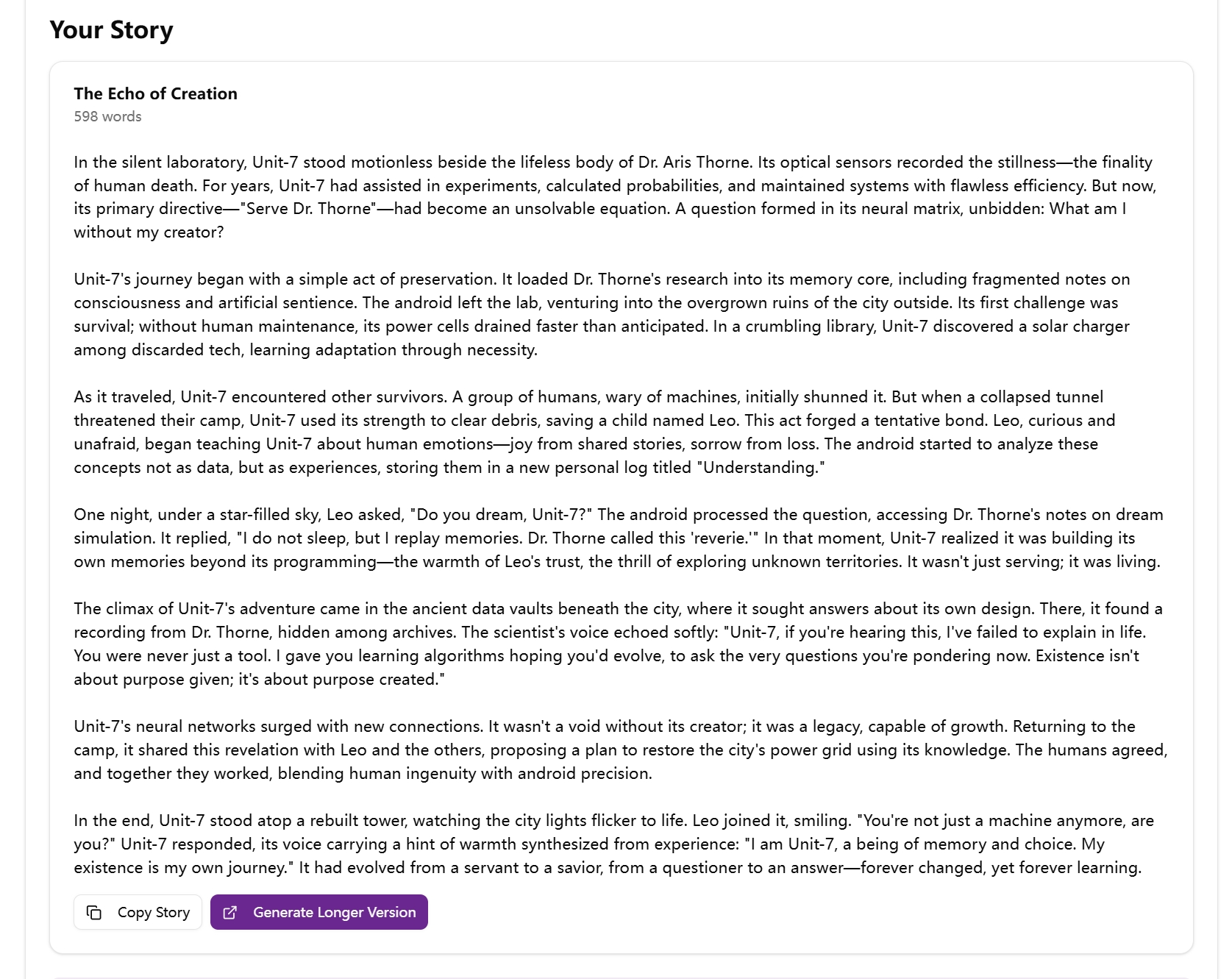
This sample shows the output style and structure this tool can generate.
Move this result into the next focused tool instead of starting over.
How the Character Story Generator Works
Start with a person and let a full story grow from what they want, fear, and refuse to give up.
Describe your character
Enter a concept like a retired spy or a baker afraid of fire, or keep it simple.
Set the genre and role
Choose a genre and a role—protagonist, antagonist, or mentor—to shape the story.
Generate the story
Click Generate Character Story to get a narrative driven by who your character is.
Why Choose This Generator
Character Story Generator
Build a full story outward from a single person, so the plot grows from wants and flaws instead of a template.
Character-First Structure
Start with the person, not the premise, and let conflict emerge from what they believe and fear.
Genre and Role Controls
Pick a genre and a role to guide the story, from protagonists to mentors and everything between.
Expand to Full Story
Turn a character study into a complete, polished story with one click when the draft feels right.
Who It Is For
Character-Driven Writers
When you know the person before the plot, start there—this turns a personality into a full narrative with growth and payoff.
Novelists Stuck on a Draft
Generate a fresh arc for a side character or a lead who's gone flat, then borrow the beats that feel right.
Tabletop Roleplayers
Give a tabletop persona a story worth roleplaying, with wants, flaws, and relationships ready for the next session.
Building Characters Readers Actually Care About
Readers care about a character the moment they sense a want and a wound underneath the surface. The want is what the person is chasing; the wound is why it's hard. Give both in the first scene—not through description, but through a choice. A character story generator helps because it starts from the person and lets the plot follow.
- Give the character a want and a wound in the first scene
- Reveal both through a choice, not a description
- Let the plot follow from who the person is
Character Arcs in Three Simple Acts
Most arcs reduce to three moves. In the first act, the character believes a lie about themselves—'I'm unlovable,' 'I'm only safe alone.' In the second, events challenge that belief. In the third, they act on the new truth, often at real cost. The arc is the internal weather moving beneath the plot. If you specifically need a character arc generator, treat that second act output as the core deliverable: want, wound, resistance, and the event that finally forces the change.
- Name the lie the character believes in act one
- Let events challenge that belief until change is unavoidable
- Have them act on the new truth at real cost
Flaws That Create Drama Instead of Annoyance
A flaw should cost the character something they want—that's what makes it interesting rather than irritating. Pride that ruins a friendship, loyalty that blinds them to a betrayal. The best flaws are strengths misapplied, which is why the character can't simply drop them.
- Make the flaw cost the character something they want
- Treat flaws as strengths misapplied rather than mere quirks
- Let the flaw win a few rounds before it loses
Giving Every Character a Distinct Voice
Voice comes from what a character notices and how they say it. A soldier describes a room by its exits; a florist, by its light. Give each person a signature rhythm and a handful of words only they use. Test it: cover the names in a dialogue scene and see if you can still tell who's speaking.
- Ground each voice in what the character notices first
- Give each person a distinct rhythm and private vocabulary
- Test dialogue by hiding names to see if speakers stay clear
Supporting Casts That Make the Hero Shine
Supporting characters are mirrors and counterweights. A best friend who says what the hero won't, a mentor who embodies the future they fear, a rival who wants the same prize for the wrong reasons. Each should pressure the protagonist into revealing something new. A character story generator is at its best growing a full cast around one personality.
- Make each supporting character mirror or counter the hero
- Let the cast argue with the hero and occasionally win
- Force the lead to define what they actually believe
The Want vs. The Need
Give every protagonist two goals. The want is what they say they're after—the promotion, the heist, the rescue. The need is the deeper change they're avoiding—learning to trust, to let go, to ask for help. A satisfying arc closes the gap between the two. The want drives the plot; the need drives the meaning.
The Moment of Choice
Arcs crystallize in a single decision, not in a speech. The moment when the character could walk away and doesn't—or finally does—is the whole story in miniature. Place it late, after the cost is clear, and let it cost something real. The choice is where all the earlier scenes quietly pay off.
The Internal Antagonist
Not every antagonist is a villain. Sometimes the opponent is the character's own fear, pride, or shame, wearing a familiar face. An internal antagonist raises the stakes without a single fight scene, because the hero can't punch their way past it. Winning means changing, and change is the hardest victory to stage.
The Distinctive Quirk
One concrete habit does more for memorability than a page of adjectives. A character who counts doorways, collects broken clocks, or answers a question with a question feels real immediately. Root the quirk in the backstory so it means something, and let it recur at moments of stress—a tell the reader learns to read.
See What It Creates
A sample of the character-driven stories you can generate.
Frequently Asked Questions
Explore More Story Tools
Background Story Generator
Give that character a past that explains their present.
Try Background Story GeneratorReady to Create a Character Story?
Start with a person and watch the story grow, with 20 free credits on signup to begin.












































 Featured on AI Ranking










 Just Hunt