Story Name Generator
Find names your readers will remember, for characters, places, and the story itself.
Please sign in to use this tool
First-time visitors can generate 1 result for free, no sign-in required. Credits are only needed after the free trial.
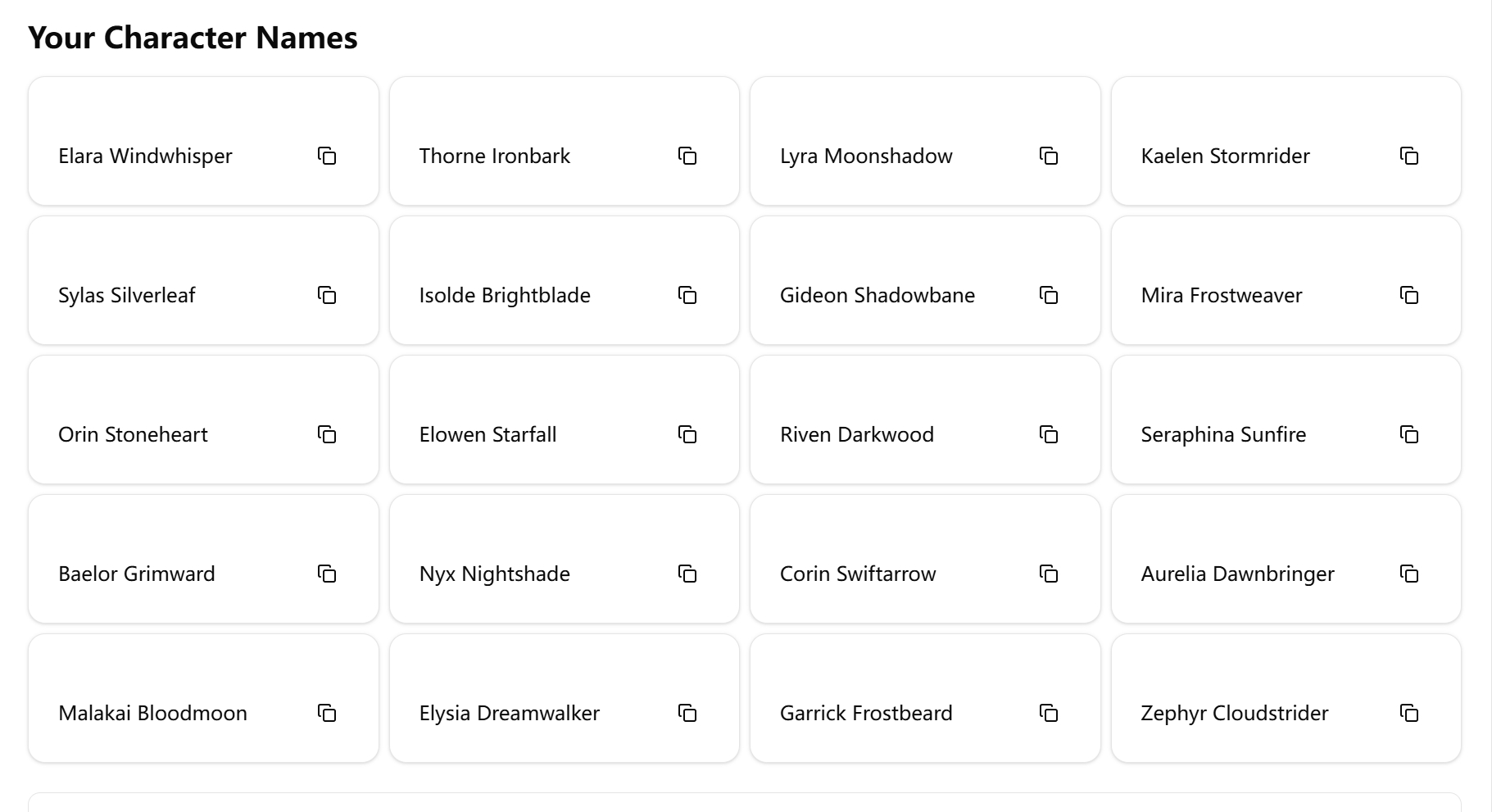
This sample shows the output style and structure this tool can generate.
Move this result into the next focused tool instead of starting over.
How the Story Name Generator Works
Three quick steps turn a blank cast list into a set of memorable, genre-matched names.
Choose a character type
Pick protagonist, antagonist, supporting, fantasy, or sci-fi to match the role.
Set culture and gender
Select a style and, if you like, a gender to narrow the results.
Generate twenty names
Get twenty names for one credit, then carry the best into a full story.
Why Choose This Generator
Twenty names at once
This story name generator returns twenty options per run, so you can compare instead of settling for the first name that doesn't feel wrong.
Genre accents
Names come matched to each genre's sound, from mythic fantasy to clipped science fiction, so the whole cast feels of a piece.
Role and gender filters
Target protagonist, villain, or supporting roles, and filter by gender and culture for names that genuinely fit the character you're writing.
Easy to pronounce
Options are shaped to trip no one's eye, so readers can say each name in their head on the first pass.
Who It Is For
Fantasy and sci-fi authors
Build a cast with consistent naming logic instead of borrowing real-world names that feel out of place in the world.
Tabletop roleplayers
Name a whole party, from the hero to the shopkeeper, without stalling the session on a single missing name.
Writers naming side characters
Supporting roles deserve names that don't blur together, and a quick batch keeps the whole cast distinct without much effort.
Naming Characters, Places, and Stories
Naming is a craft of its own, and it works differently for characters, places, and the story itself. A character name carries tone and history; a place name sets geography and mood in one word, while a title is a promise about the whole reading experience. This story name generator gives you a starting pool for all three, so you can compare options.
- Treat character, place, and story names as different crafts
- Match each name's tone to what it labels
- Compare a pool of options instead of settling early
What Makes a Fictional Name Memorable
Memorable names balance three things: they're easy to say, they fit the character, and they don't collide with other names in the same book. Readers need to pronounce a name in their head, so beware of consonant piles that trip the eye. Aim for simple enough to remember and specific enough to belong to one character.
- Make every name easy to say in the reader's head
- Fit the name to the character and avoid cast collisions
- Keep distinct first letters so characters don't blur together
Name Styles That Fit Each Genre
Each genre has a naming accent. Fantasy leans on older, layered sounds and mythic echoes, while science fiction often invents names that feel engineered or clipped. Romance favors warmth and euphony; horror favors the slightly off or the too-ordinary. Historical fiction needs names that actually existed in the era you're writing about.
- Match names to each genre's accent and sounds
- Verify historical names against the era and class
- Break a genre's accent on purpose for a memorable mismatch
Avoiding Names That Break Immersion
A name fails when it yanks the reader out of the story. The usual culprits: a modern name in a medieval world, two leads whose names sound alike, or a name that's secretly a joke you'll have to explain. Watch for accidental meanings in other languages and for real names with heavy baggage. Then read the name aloud in dialogue.
- Watch for anachronistic names that break the world's logic
- Avoid two leads whose names sound too much alike
- Check for accidental meanings and heavy real-world baggage
- Read each name aloud in dialogue to catch stumbles
Testing a Name with Real Readers
You're too close to a name to judge it alone. Read a scene aloud with the name in it and see whether it trips you. Ask a few readers to pronounce it cold and watch which version sticks. Then say it next to the other leads and listen for collisions. The goal is catching the one problem you can no longer hear.
- Read a scene aloud to hear how the name lands
- Ask readers to pronounce it cold and note what sticks
- Test it against hero, villain, and sidekick tones
- Say it beside other leads and listen for collisions
Protagonist Names
The protagonist's name sets the reader's first impression and gets said most often, so it should be easy to pronounce and pleasant to repeat. Match it to the character's background, and keep it distinct from the antagonist's name so the two leads never blur in a scene.
Villain Names
A villain's name should feel earned rather than cartoonish. Subtle menace, a soft name with a hard history, often lands harder than 'Malice Darkblood.' Test it against the hero's name for contrast, and avoid giving every antagonist the same sharp, hissing sounds.
Place Names
Places need names that imply geography and history at a glance: a name that sounds like a map entry, not a person. Borrow from real naming patterns, a river town, a hill fort, a founding family, and keep the sound consistent with the region you've built.
Fantasy Names
Fantasy names work best when they feel old and follow a consistent internal logic. Decide how your world forms names, whether clan prefixes, compound words, or borrowed syllables, and stick to it. One or two invented sounds per name is enough; too many consonants and readers stumble.
See What It Creates
Each run returns twenty memorable, genre-matched names for your cast.
Frequently Asked Questions
Explore More Story Tools
Find the Perfect Story Name Today
Generate memorable, genre-matched story names in seconds — 20 free credits on signup.











































 Featured on AI Ranking









 Just Hunt