
Story Outline Generator – Structure Your Story in Seconds
Get a flexible plot skeleton in seconds, so you spend your time writing instead of rewriting.
Leave blank for a generic story outline structure.
Comma-separated; helps the story outline generator focus.
Please sign in to use this story outline generator.
First-time visitors can generate 1 result for free, no sign-in required. Credits are only needed after the free trial.
This sample shows the output style and structure this tool can generate.
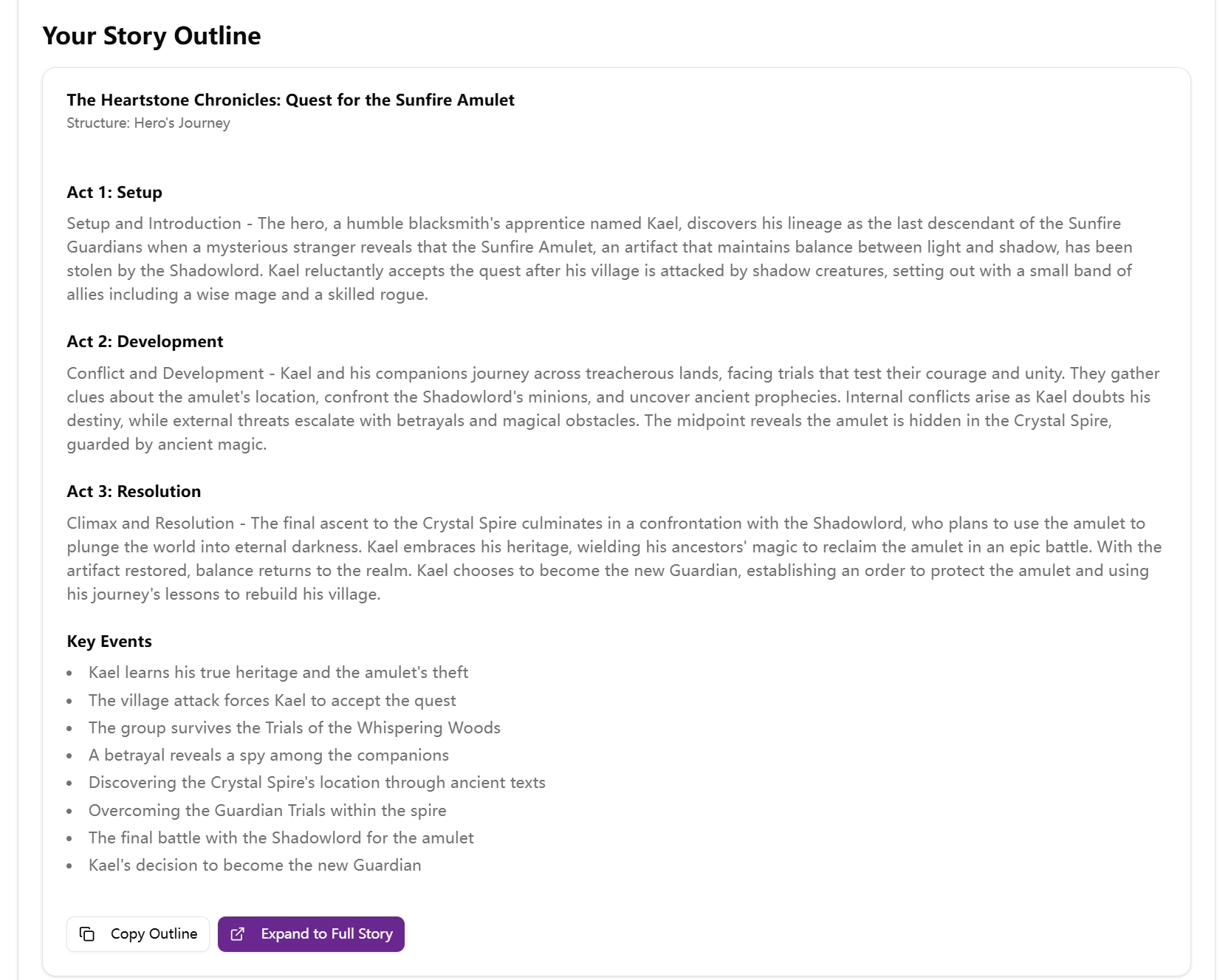
Move this result into the next focused tool instead of starting over.
How the Story Outline Generator Works
Plan a clear structure in three quick steps, then start drafting with confidence.
Add your story idea
Drop in a concept or leave it blank for a generic story structure.
Pick a genre and keywords
Choose a genre and add optional keywords to steer the outline.
Generate and refine
Get a scene-by-scene plan in seconds, then adjust it until it fits.
Why Choose This Generator
Fast, Flexible Outlines
The story outline generator turns a rough idea into a clean scene-by-scene plan in seconds, so you write more and rewrite less.
Scene-by-Scene Structure
Break the story into beats and individual scenes, so every chapter has a clear job before you draft it.
Multiple Outline Styles
Switch between three-act, beat sheet, snowflake, and chapter-map formats to match how your brain works.
Genre-Aware Planning
Shape the outline around your genre, from mystery reveals to romance pacing, so the structure fits the story.
Who It Is For
Novelists planning a first draft
Map the full arc before you write so the messy middle never stalls you. Adjust beats as characters surprise you, and keep momentum through the whole book.
Short fiction and competition writers
Shape a single scene or a complete story from one prompt, and hit a contest deadline with a structure that already holds together.
Screenwriters and game writers
Sketch a beat sheet or three-act spine in minutes, then spend your time on dialogue, visuals, and the moments readers remember.
Why Outlining Saves You Rewrites
Most abandoned drafts die in the messy middle, not at the start. A loose plan keeps you moving because you always know the next beat. When a chapter drifts, you fix a few lines instead of deleting three chapters. Treat the outline as a map, not a cage — reroute rather than rebuild.
- Write down the next beat before you finish the current one
- Fix a drifting chapter early instead of deleting finished pages
- Treat the outline as a direction, not a set of locked rules
Simple Outline Methods That Actually Work
You don't need a spreadsheet to plan well. The three-act structure — setup, confrontation, resolution — handles most short fiction. A beat sheet lists emotional turns in order, while the snowflake method grows one sentence into a page. A story outline generator can produce any of these on demand.
- Use the three-act shape for short stories and simple arcs
- List emotional turns in order to keep momentum steady
- Grow a one-sentence idea into a paragraph, then a page
- Test several methods and keep the one that fits
From Skeleton Outline to First Draft
A skeleton is bones; the draft is where flesh appears. Move scene by scene and treat every bullet as a promise to the reader. If your plan says 'the detective finds a clue,' decide where, how, and why it lands. Don't panic when the draft drifts — that's normal.
- Treat each outline bullet as a promise to the reader
- Decide where, how, and why every planned moment lands
- Expect the draft to drift and adjust as you write
Flexible Outlines for Discovery Writers
Discovery writers — pantsers — find the story by writing it, and a rigid outline can feel like a straitjacket. The fix is a flexible outline: note the turning points you already know and leave the space between them open. You get direction without being boxed in.
- Note only the turning points you already know
- Leave the space between beats open to discover
- Use direction to guide you without boxing you in
Outlining Scenes vs Outlining Chapters
Chapters are packaging; scenes are the engine. Plan at the scene level first: each scene needs a character with a want, an obstacle, and a change, however small. Chapters then group scenes into readable chunks. If a scene can be cut without changing the plot, it probably should be.
- Give every scene a character, a want, and an obstacle
- Group finished scenes into chapters as readable chunks
- Cut any scene the plot survives without losing
Three-Act Structure
The workhorse of plotting. Act one establishes a want, act two complicates it, act three resolves it. It works because readers recognize the shape without seeing the machinery. Use it for shorts and novels alike, then layer more beats on top as your story grows.
Save the Cat Beat Sheet
Borrowed from screenwriting, this splits a story into fifteen beats: opening image, catalyst, midpoint, all-is-lost, finale, and more. It's ideal when you want a detailed map and don't mind extra structure. Punchy pacing arrives almost for free.
Snowflake Method
Start with a one-sentence summary, expand it to a paragraph, then to a page. Each pass adds detail without losing the core. Great for writers who freeze when asked to outline a whole book at once — you grow the plan slowly instead.
Chapter-by-Chapter Map
Write one line per chapter: who acts, what changes, why it matters. The map becomes a checklist you can reorder as the story evolves. It's the fastest way to spot a sagging middle before you draft it.
One-Page Synopsis
Condense the whole plot to a single page of present-tense summary. If it reads clearly, your structure is sound; if you can't summarize it, the plot may be tangled. Useful for pitches and query letters, too.
See What It Creates
A clear, ready-to-draft outline, built from your idea in seconds.
Frequently Asked Questions
Explore More Story Tools
Plan Your Plot with a Story Outline Generator
Turn a rough idea into a clear scene-by-scene plan in seconds — get 20 free credits on signup.












































 Featured on AI Ranking










 Just Hunt